
When to commission research
Perhaps you know your grandparents but little about their parents. Or your existing tree has a missing branch or conflicting dates. Documentary research connects known names to earlier generations.
We start with one parental branch to define scope and budget. For a family book or several surnames, we agree separate stages.
How I verify relationships
I compare births, marriages, deaths, parents, residences, house numbers and family circles. One matching surname is insufficient: namesakes may share a village.
Where registers are missing, I check censuses, confession and revision lists, cadastral surveys and other local sources. Facts are clearly separated from hypotheses.
First, a clear plan. Research begins once we agree the task, budget and deliverable.
What you receive
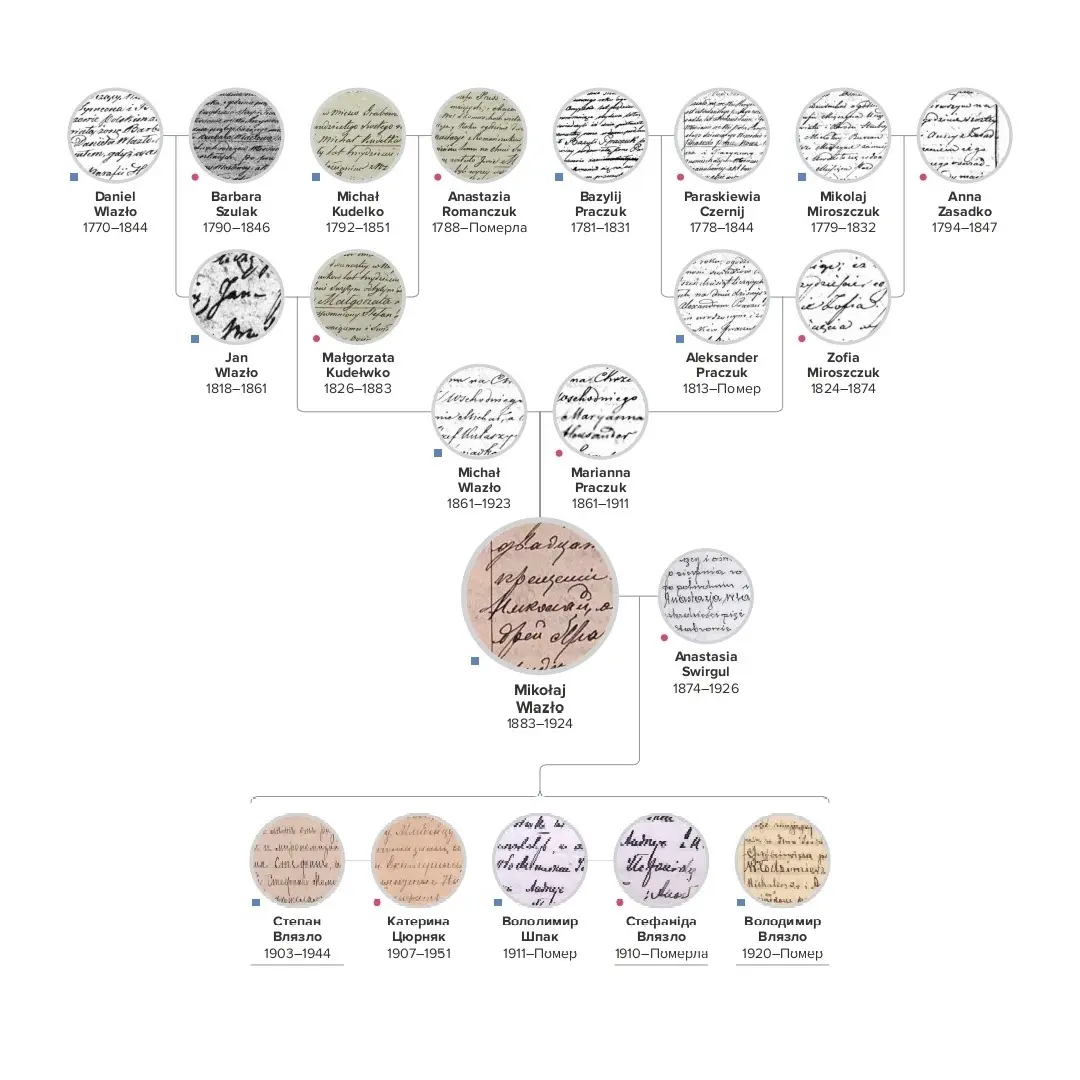
The agreed deliverable may include copies, explanations, full references, a tree, report and GEDCOM file. GEDCOM lets you move the tree into genealogy software and continue it later.
A family book is a separate format combining biographies, maps, documents, photographs, children’s tables and generation charts. Explore the Antoniuk and Khylko examples before ordering.
The cost of family history research
Tracing one branch to its earliest documented generation starts at UAH 7,000. The final fee depends on the place, period, starting information and surviving sources.
Records determine how many generations can be traced, so I cannot guarantee a number. If a collection is lost, we discuss alternatives and next steps. The assessment helps you decide whether to begin.
What to send first
Send your earliest known relative’s name, place and approximate lifetime. Add parents or spouse if known. Documents can follow in correspondence; a short description is enough to start.
Questions about this service
Do you research both parental lines?
Yes. We agree the branches, priorities and budget for each stage.
Can you start from an existing tree?
Yes. I check its sources, missing evidence and prospects for earlier generations.