
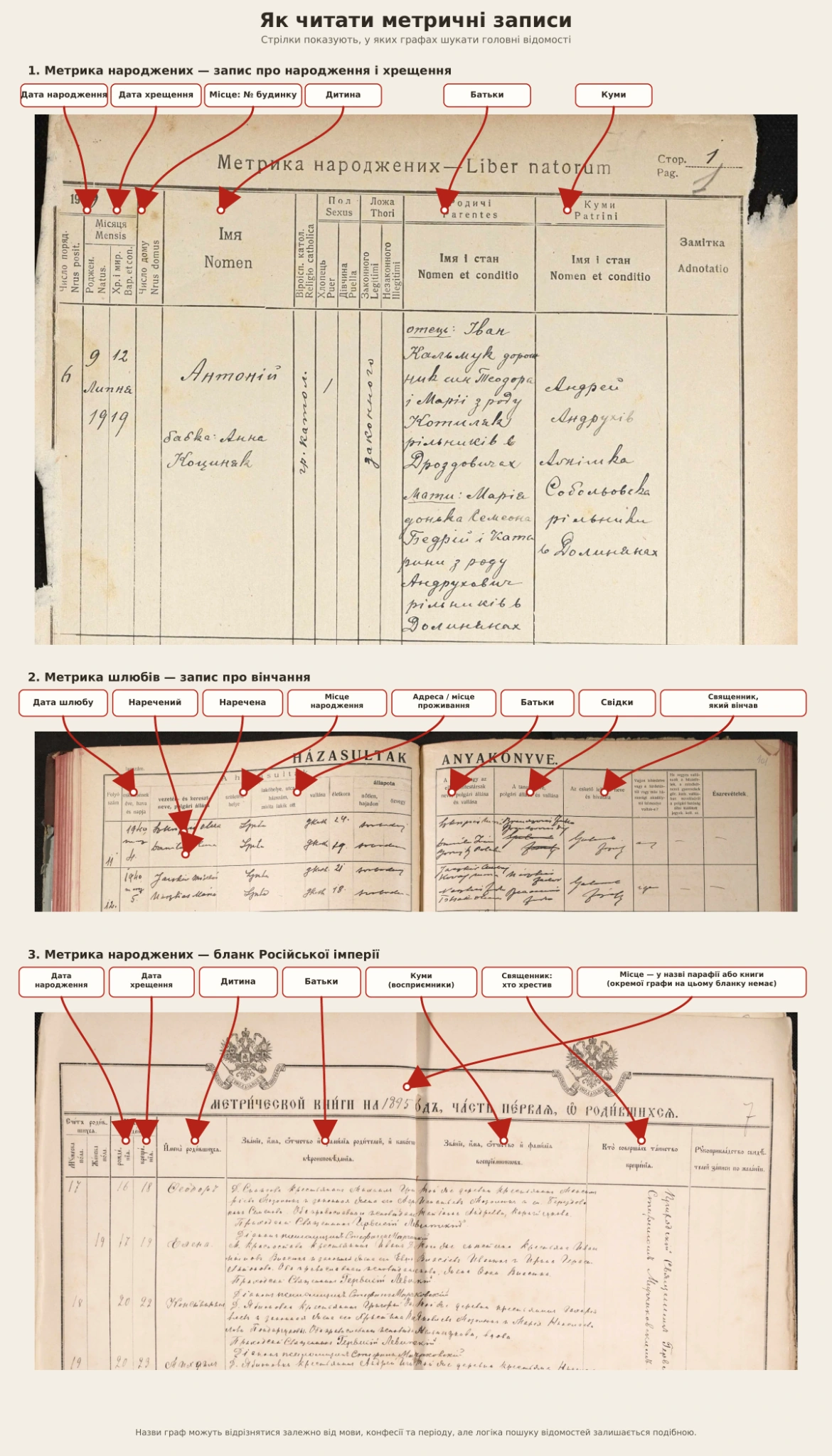
Start with the parish name, year, relevant section and column headings before looking for the surname. Once the page structure is clear, the handwriting becomes much easier to read.
What is a parish register?
Religious communities kept these registers. Christian parish books most often contain sections for births and baptisms, marriages, and deaths and burials. Other faiths may use different formats. Sections may survive separately, cover several years or be incomplete.
Check four things on the opening page: the church or community, settlement, denomination and year. Make sure this is the right parish before reading a familiar surname. A neighbouring village may have belonged to a different church.
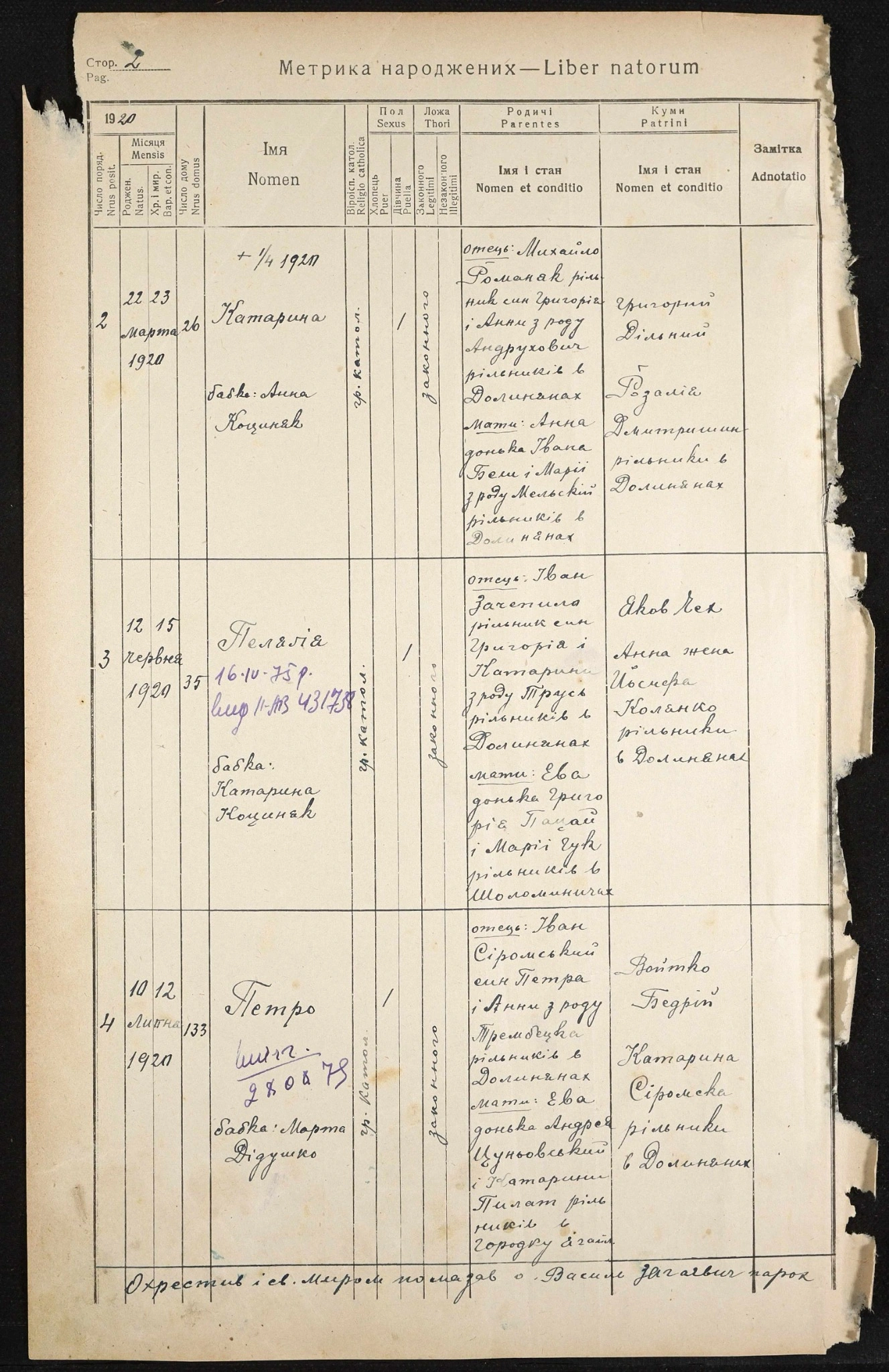
Reading a birth entry
A birth entry usually gives an entry number, birth and baptism dates, the child’s name, parents, residence and godparents. It may also record the father’s status or occupation, religion, house number and whether the parents were married. Not every register includes the mother’s maiden name; its absence does not necessarily mean the entry is incomplete.
Record both dates first: birth and baptism are different events.
Then find the child’s name and the full details of both parents.
Note the village, hamlet or house number separately.
Do not overlook the godparents: they may be relatives of either parent.
What to look for in a marriage entry
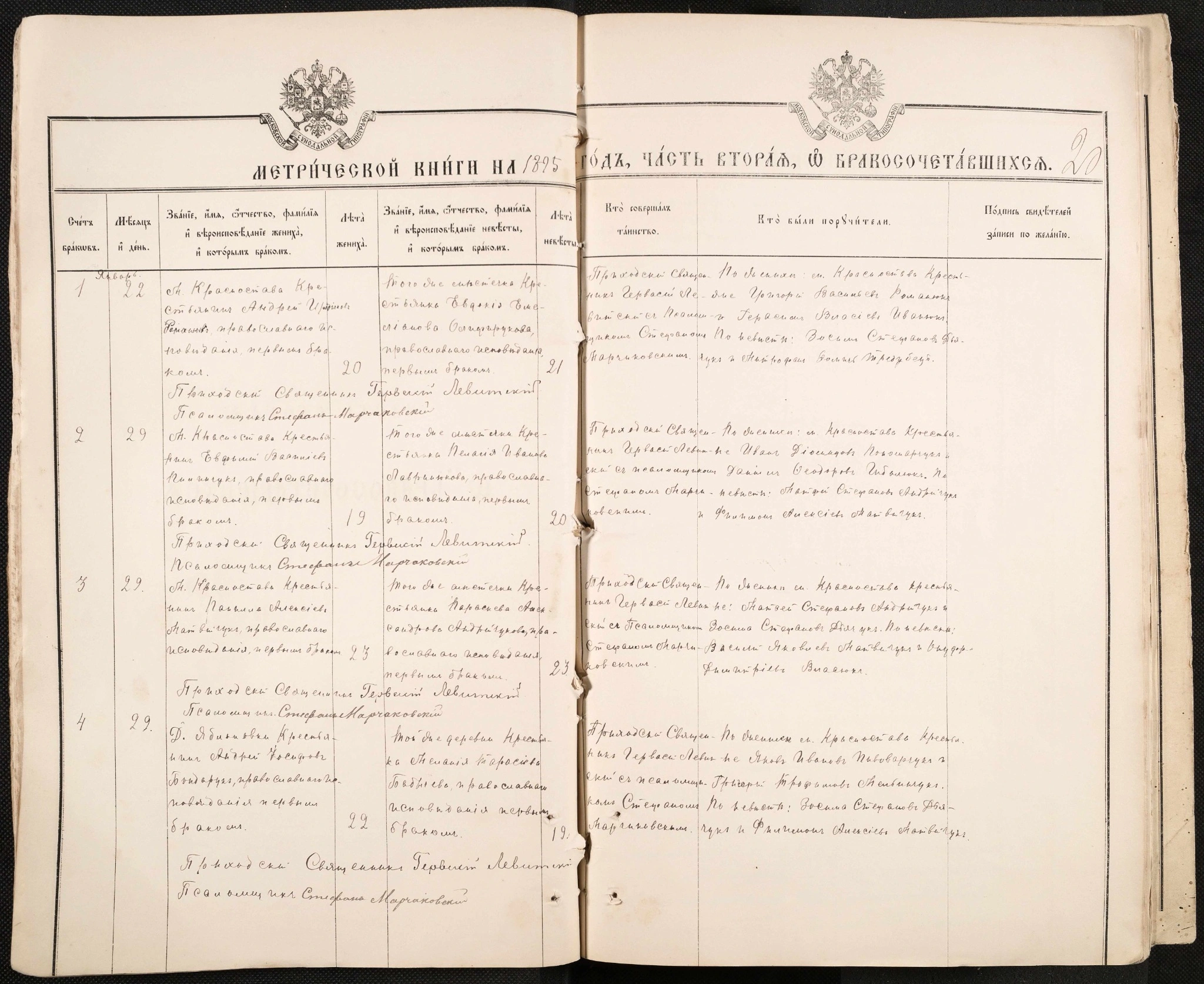
A marriage entry is especially valuable because it can link two families. Look for the wedding date, the couple’s names and ages, marital status, residence, parents and witnesses. Terms meaning bachelor, maiden, widower or widow indicate whether it was a first marriage. This is often where a woman’s maiden name and home village can be established.
What a death entry can tell you
The death section may give death and burial dates, name, age, social status, address, cause of death and a spouse’s or father’s name. Age was often reported by relatives and may be several years out. Subtracting it from the death year gives only an estimate of the birth year, which needs further checking.
Working with language and old handwriting
In territories of the former Russian Empire, records are often written in pre-reform Russian, including letters such as ѣ and і and a hard sign at the ends of words. Many Galician books use Latin or Polish; records from Bukovyna and Transcarpathia may use German, Romanian or Hungarian. You need not master the whole language: build a small glossary of recurring terms for birth, baptism, marriage, widowhood, death, months and numbers.
Read a few neighbouring entries even if they concern other families. The priest repeated the same phrases, so a clearly written word in one line can help you recognise it elsewhere. Compare individual letters in names you can already read.
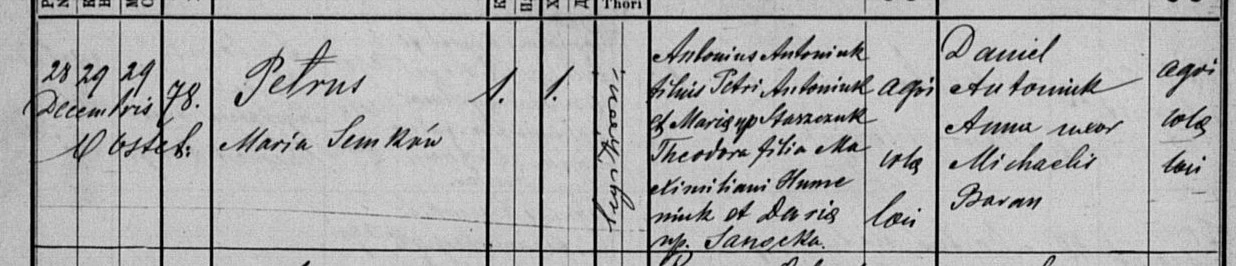
Example: Petro Antoniuk of Tiahliv
The supplied transcription of a Tiahliv entry concerns Petro Antoniuk, born on 28 December 1887 and baptised the following day. It lists house No. 78, parents Antonii Antoniuk and Feodora Humeniuk, and godparents Danyil Antoniuk and Anna, wife of Mykhailo Baran. This is a brief teaching summary; the full reading of the names requires comparison with the original register. A house number does not establish where the baptism took place.
Checking that you have found the right person
One matching name is not enough. Check siblings’ births, the parents’ marriage, children’s deaths and recurring godparents. Two people of the same name and age may have lived in the village at once. Family groups, addresses, occupations and witnesses help tell them apart.
Save the full spread as well as a close-up of the entry. Label the file with the archive, collection, inventory, file and folio or digital image number. Without a reference, a valuable discovery can soon become an image of unknown origin.
See the Babych example: from a civil marriage record to two parish birth entries.
Need a next step for your own family?
Tell me who you are looking for and where the search has stalled. We will assess the possibilities and identify the sources needed.
Discuss your researchWhere to check sources and access rules
- Diia Guide — applicants and documents for Ukrainian civil registry extracts ↗
- Central State Historical Archives in Kyiv — finding aids and digital records ↗
- State Archival Service of Ukraine — enquiry types and civil record searches ↗
Illustrations and captions come from the supplied family and research materials. Check the holding institution and access conditions for each individual document.